Most business problems aren't caused by a lack of effort. They're caused by inefficient processes, repetitive work, poor visibility, or technology that no longer fits.
Manual forms, approvals, tracking sheets, and repetitive administrative work that consume time without adding value.
Processes that rely heavily on copying, updating, checking, and chasing information — all day, every day.
Difficulty tracking projects, operations, inventory, or business performance in a clear and meaningful way.
Information spread across notebooks, spreadsheets, chat messages, and systems that don't talk to each other.
Computers, networks, software, and systems that create bottlenecks instead of solving them.
Processes that worked when the business was smaller but struggle to keep up as things grow.
Most businesses don't need more software. They need better systems.
I start by understanding how the work actually gets done. Once I understand the current process, I look for bottlenecks, unnecessary steps, and repetitive work.
Sometimes the answer is process improvement. Sometimes automation. Sometimes technology. Sometimes just better visibility. The goal isn't to add complexity — the goal is to make the work easier.
Map out how work actually flows — not how it's supposed to, but how it actually does today.
Bottlenecks, unnecessary steps, repetitive tasks, and visibility gaps. The root cause, not the symptom.
Process improvement, automation, or technology — whichever fits the problem. Never more than what's needed.
Practical implementation with clear handoff so the business can run it independently going forward.
Review existing workflows and identify inefficiencies, bottlenecks, and areas for improvement. Understand what's actually slowing things down before suggesting a fix.
Improve how information moves through the business and reduce unnecessary friction. Less chasing, less duplicating, less manual checking.
Dashboards, internal tools, reporting systems, digital forms, spreadsheet automation, and AI-assisted workflows — built for how your business actually works.
PC maintenance, network diagnostics, CCTV maintenance, and general operational technology support. The day-to-day IT that keeps things running.
Small proof-of-concept projects designed to test ideas before committing to larger investments. Start small, validate, then scale what works.
I understand both sides — which means I can connect the business problem to the right technical solution without overcomplicating it.
Fixing the same problem repeatedly isn't a solution. I look for why it keeps happening, and address that instead.
The simplest thing that works reliably is almost always better than the most sophisticated thing. I prefer solutions that last.
Most businesses don't need a transformation. They need consistent, targeted improvements that build on each other over time.
Tools are a means to an end. I never recommend a product I can't connect directly to your specific situation. I start with the problem, not the software.
Operations Specialist · Business Improvement
I've spent over ten years working inside businesses — not as an outside consultant who reads reports, but as the person responsible for keeping operations running across healthcare, telecommunications, logistics, and technology companies.
I've seen what happens when good people are stuck inside systems that make their jobs harder than they need to be. That experience is why I focus on finding the root cause of the problem, not just the visible symptom.
I work directly with business owners. No middlemen, no account managers, no junior staff doing the actual work. When you contact me, you get me.
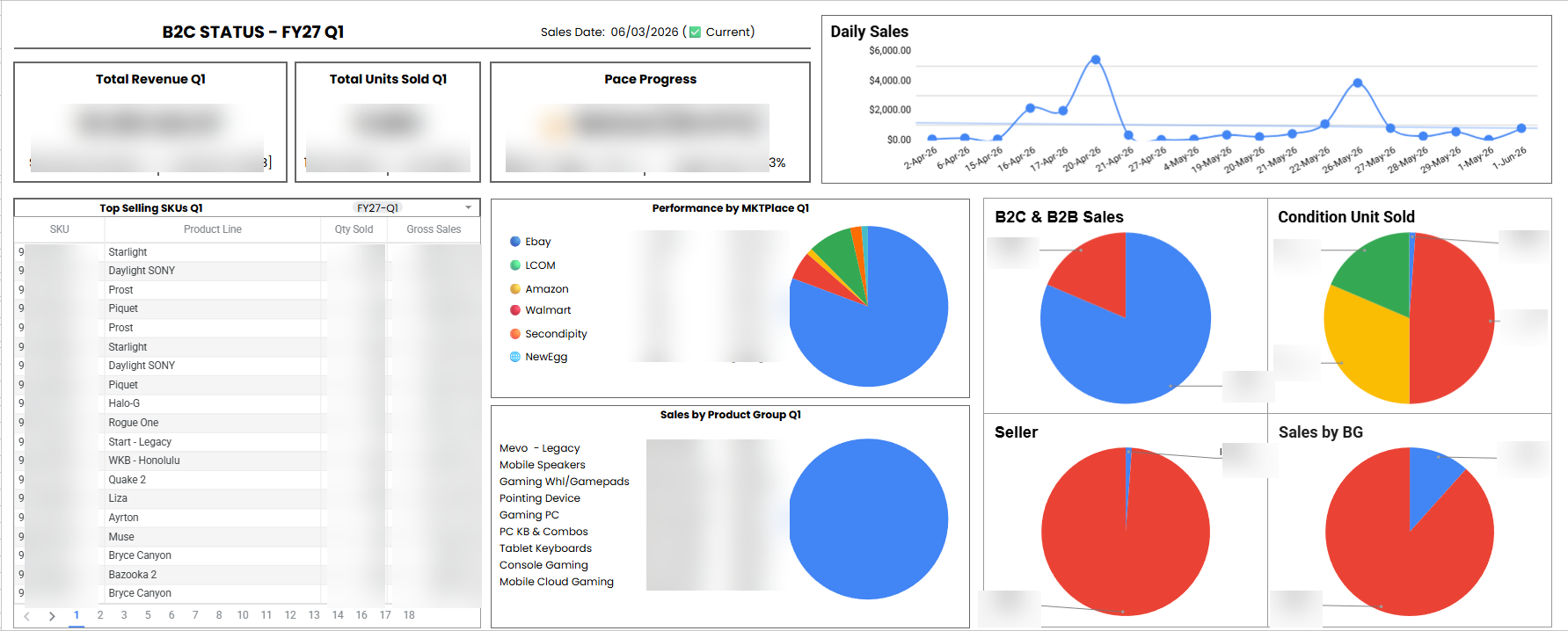
Replaced a daily routine of manual VLOOKUPs and copy-pasting across multiple Excel files with a single automated dashboard. Built on Google Sheets and Google Apps Script, it consolidates every key metric into one analytical view — so the team can make business decisions at a glance instead of rebuilding comparison sheets by hand each morning.
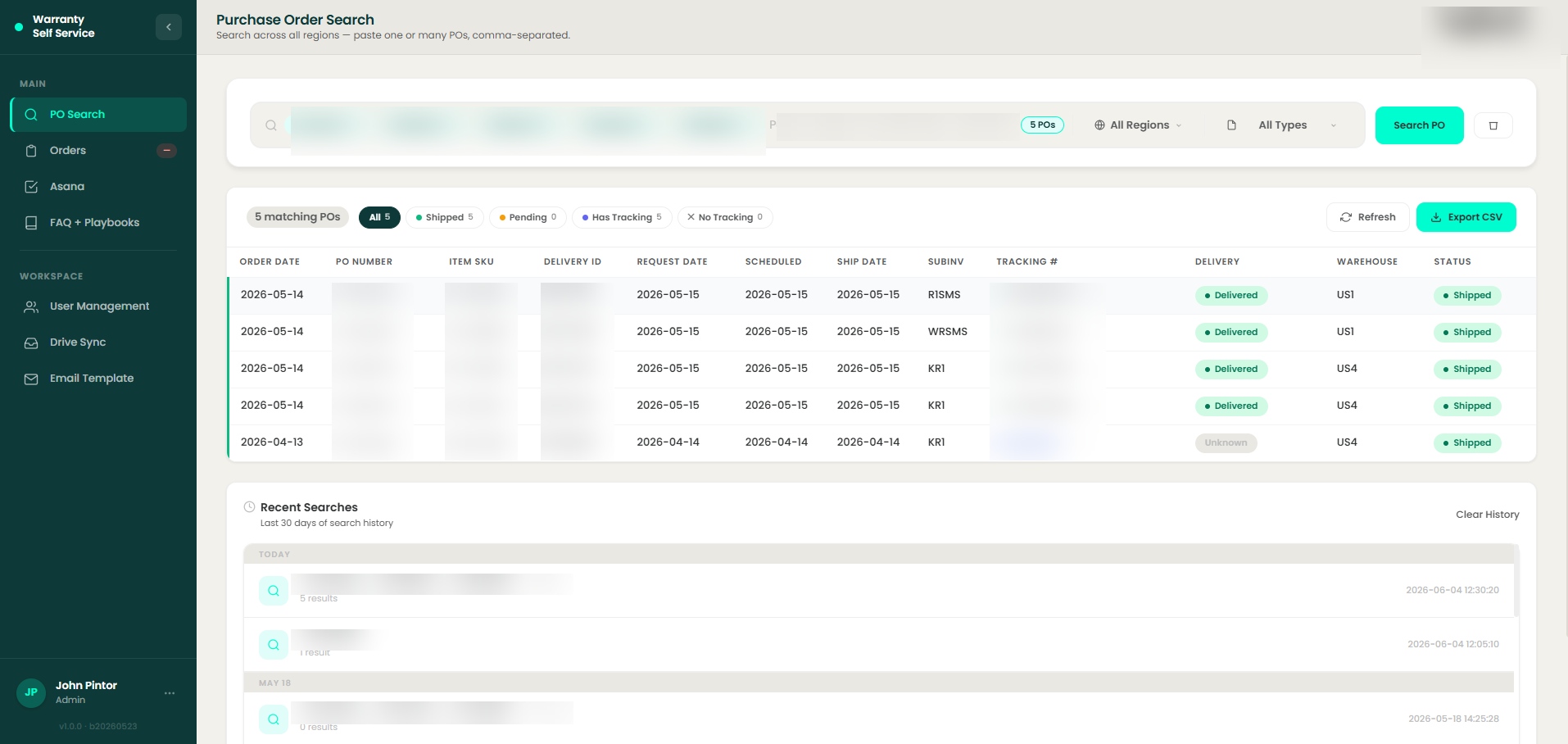
Built a web app that brings all warranty-related data into one self-help portal — ending the manual lookups across multiple files and sources. It removed the constant back-and-forth between warranty operations and the partner contact center for tracking numbers, order information, returns, and cancellations. An embedded Asana view gives non-company partners full in-app access without a company account — they can still comment, mention teammates, and upload images directly in comments, exactly as they would inside Asana.
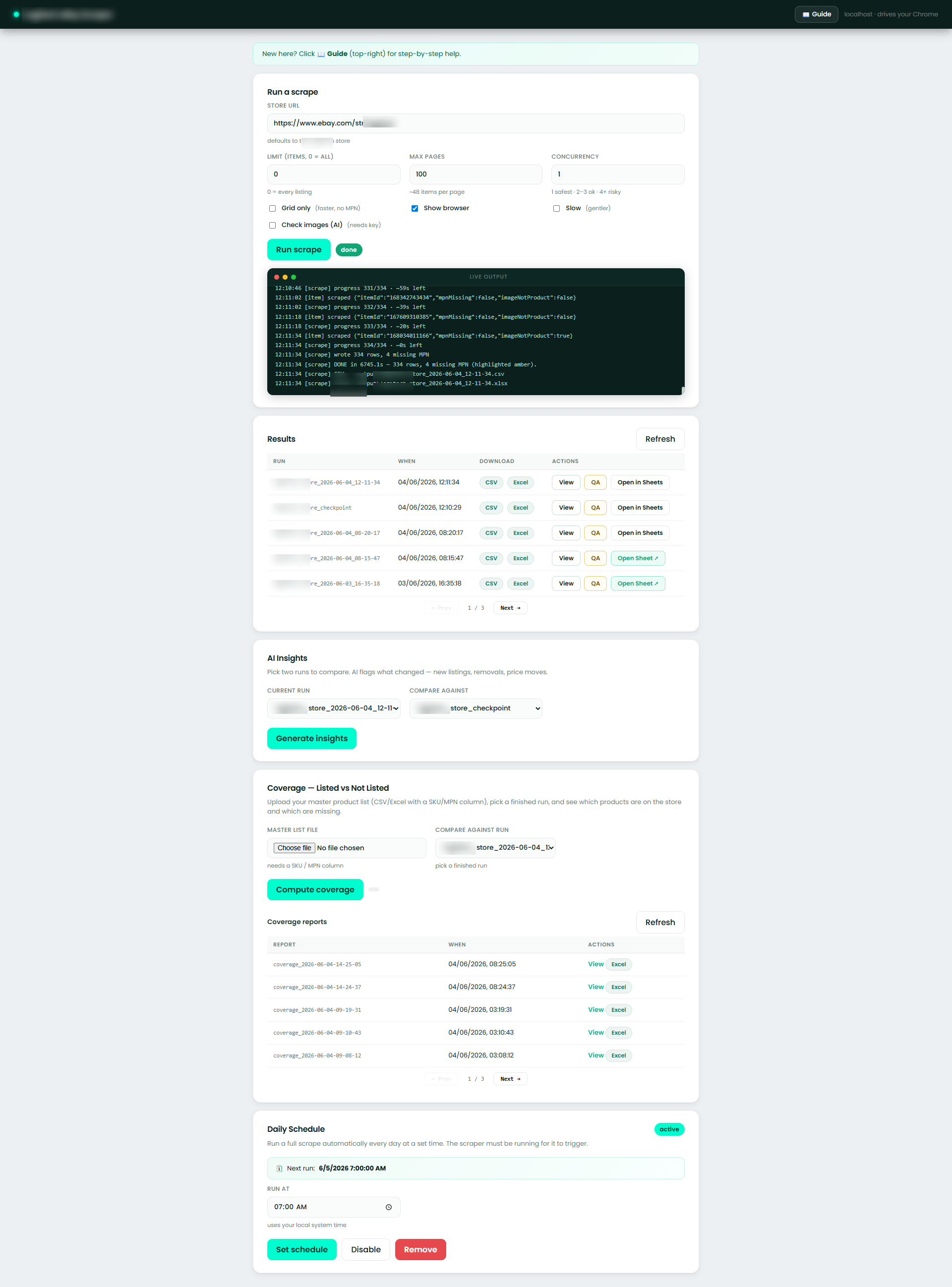
Automated a 3–6 hour daily routine that used to mean checking a large eBay storefront by hand — searching every product one by one to validate specifications, images, titles, and pricing, then reconciling what's listed versus what's missing. The validator scrapes the full store, uses AI LLMs to verify each product listing's images against the expected product, flags problems, and computes listed-vs-not-listed coverage against a master product list. It also generates AI insights that compare two runs and surface what changed — new listings, removals, and price moves. Results can be viewed right in the app or converted directly into Google Sheets, and a built-in daily scheduler runs everything automatically — so the validated data is ready and waiting by the time the assigned employee logs in, removing the human error that crept in from repetitive, stagnant manual work.
No technical jargon. No sales pitch. No obligation.
Just explain what's causing frustration, and I'll let you know if I think I can help.
Responds within 24 hours · jpintor@rotniprojects.com · +63 960 504 4898